
GRADE 7 ROBOTICS & SUSTAINABILITY EXHIBITION · OCTOBER 2026
Collect rain. Store water. Water plants wisely.
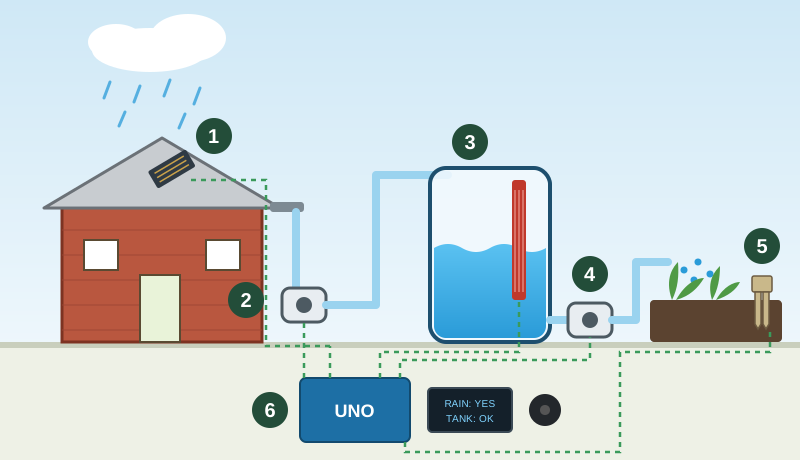
For our Grade 7 Robotics and Sustainability Exhibition, my classmate and I built a smart rain water harvesting model. An Arduino notices when it rains, pumps the water from the roof into a tank, and waters the plants — but only when the soil is actually dry.
The idea
Most rain water harvesting systems just collect water. We wanted ours to also decide when to use it. The Arduino reads three sensors and follows one simple rule:
Dry soil + enough tank water + no rain = watering
So the plants never get watered while it’s raining, and the pump never runs on an empty tank.
How it works
- Detect rain
The sensor plate on the roof detects wetness. The OLED screen shows “rain detected”.
- Warn and collect
Five beeps sound. The inlet pump starts if the tank is not full.
- Transfer rainwater
The inlet pump moves roof water through the pipe into the storage tank.
- Monitor the tank
The water level sensor checks how full the tank is. A full tank stops the inlet pump.
- Stop collection
When the rain plate dries, three beeps sound before the inlet pump stops.
- Check before watering
The soil sensor checks for dryness. Watering needs enough tank water, no rain, and the inlet pump to be idle.
- Warn and water
Three beeps sound. The outlet pump waters for three seconds, then pauses for ten seconds.
- Recheck and repeat
Wet soil, rain or low tank water stops the watering. If the soil stays dry and everything else is OK, another burst follows.
What’s inside
| Component | Qty | What it does |
|---|---|---|
| Arduino Uno | 1 | Controls the system using the sensor readings. |
| Rain sensor and module | 1 set | Detects rain on the model roof. |
| Soil moisture sensor and module | 1 set | Checks whether the soil needs water. |
| Water level sensor | 1 | Monitors the water in the storage tank. |
| OLED display | 1 | Shows readings, messages and pump status. |
| Relay channels | 2 | Switch the two pumps on and off independently. |
| Inlet water pump | 1 | Moves roof water into the storage tank. |
| Outlet water pump | 1 | Delivers stored water to the plants. |
| Passive buzzer | 1 | Gives warning beeps before the pumps start or stop. |
| 100 kΩ potentiometer | 1 | Lets visitors pretend the soil is wet or dry. |
| Storage tank | 1 | Stores rainwater for later watering. |
| Roof channel and tubing | As needed | Guide water through the system. |
| Model house and platform | 1 set | Hold the roof and all the parts. |
| Soil and plant area | 1 | Shows the automatic watering in action. |
| Power supply, USB and wires | As needed | Power the system and connect everything. |
Download the circuit diagram (PDF) ↓
Why it matters
- Save freshwater — use collected rain for gardening instead of tap water.
- Reduce waste — watching the tank level helps prevent overflow.
- Water wisely — plants get water only when the soil is dry.
- Use technology responsibly — sensors make the decision, so no water is wasted.
The project supports the UN Sustainable Development Goal 6: Clean water and sanitation.
Photos from the exhibition
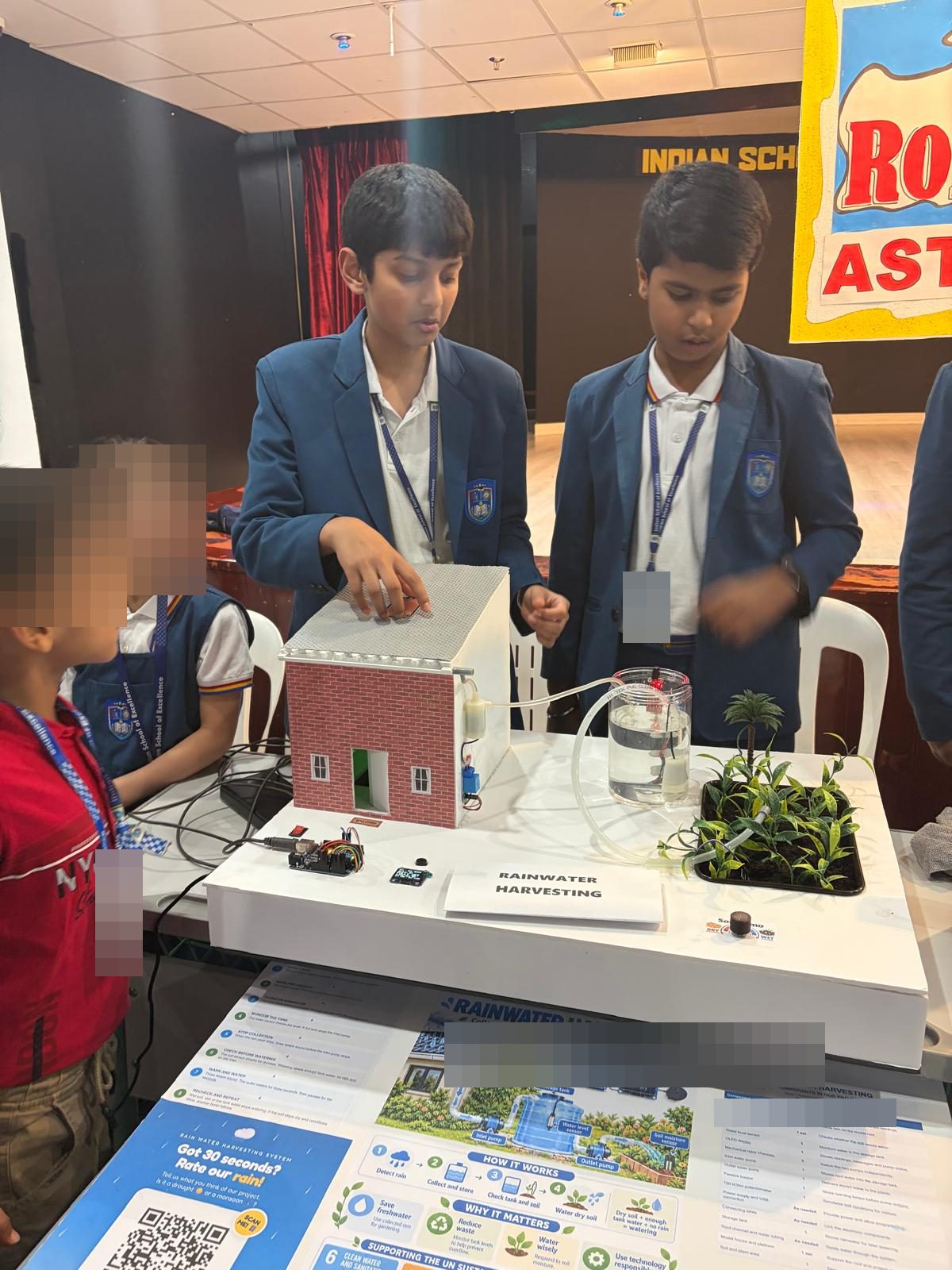
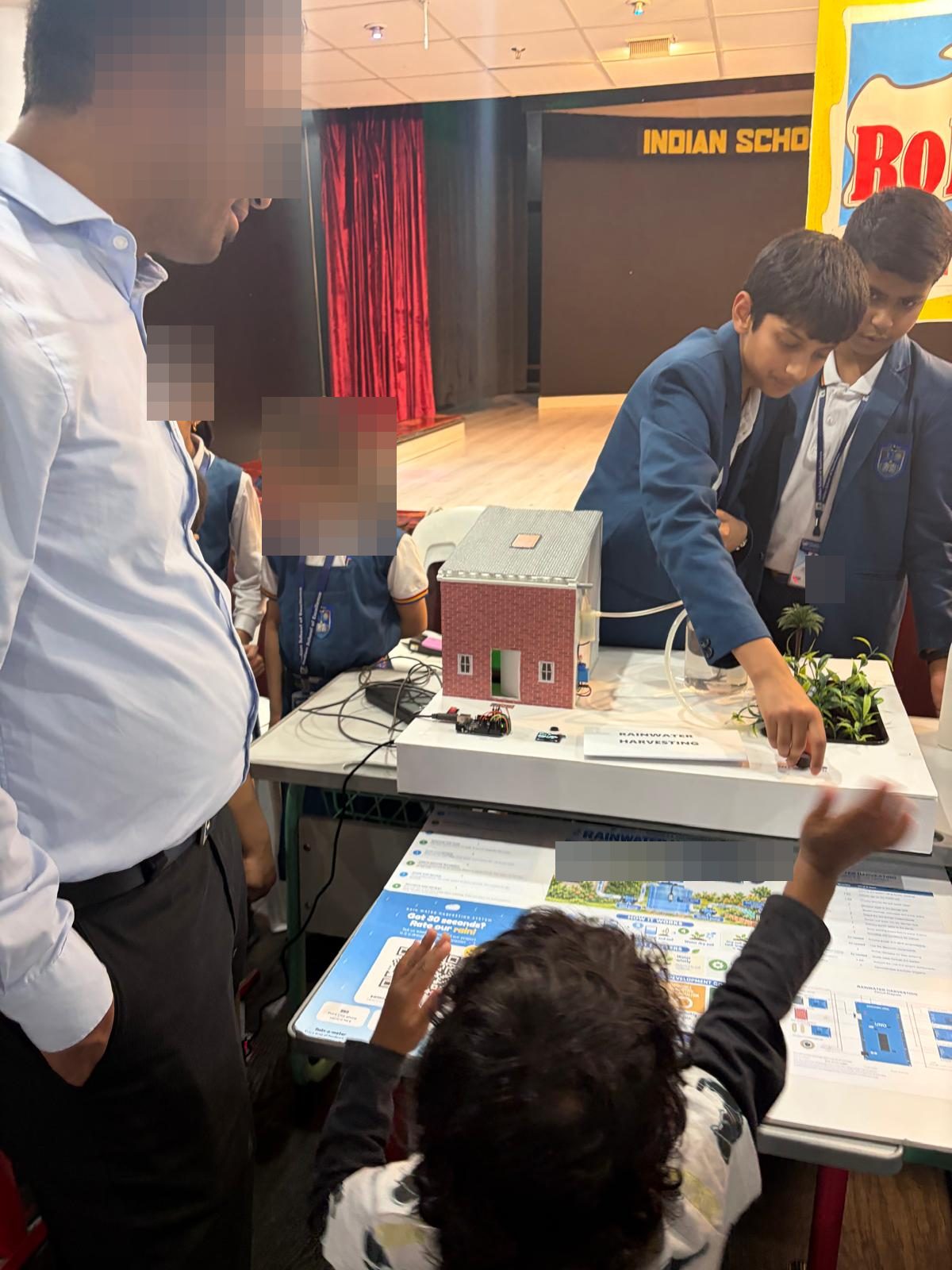
I’d love to hear your ideas for making it even better.